- Mar 18, 2025
How to Stop White-Knuckling Sobriety: A Whole-Health Approach
- Heidi Oberst
- 0 comments
Sobriety can feel like an uphill battle, especially when you're relying solely on willpower. You’ve decided to quit drinking, but that doesn’t mean cravings and tough moments go away easily. Sound familiar?
Here’s the thing: white-knuckling through sobriety doesn’t have to be the norm. It doesn’t have to feel like you're just barely hanging on. That’s where a whole-health approach can really make a difference.
I’m Heidi, a Christian Whole-Health Sobriety Coach for women, and I’m here to show you how the Biopsychosocial Model can help you break free from the cycle of white-knuckling and start thriving in your sobriety. This model is the foundation of how we address the physical, emotional, and social sides of staying sober, making it possible to feel empowered, not exhausted.
Why Willpower Alone Fails
Most of us believe that if we just try harder, we can stay sober. But honestly? Willpower is a finite resource. Every decision you make throughout the day drains your mental energy. This is called decision fatigue — and it’s why cravings often hit hardest in the evening. Makes sense, right?
Instead of relying solely on willpower, it’s essential to create a plan that supports your body, mind, and spirit. This is where the Biopsychosocial Model comes in.
The Biopsychosocial Model Breakdown:
BIOLOGY: Brain chemistry, nutrition, nervous system regulation, hormones, and gut health.
PSYCHOLOGICAL: Emotions, mindset, stress management, and mood regulation.
SOCIAL: Environment, support system, faith, purpose, and values.
By addressing these areas, sobriety shifts from a fight to a sustainable, empowered choice. Sounds pretty good, doesn’t it?
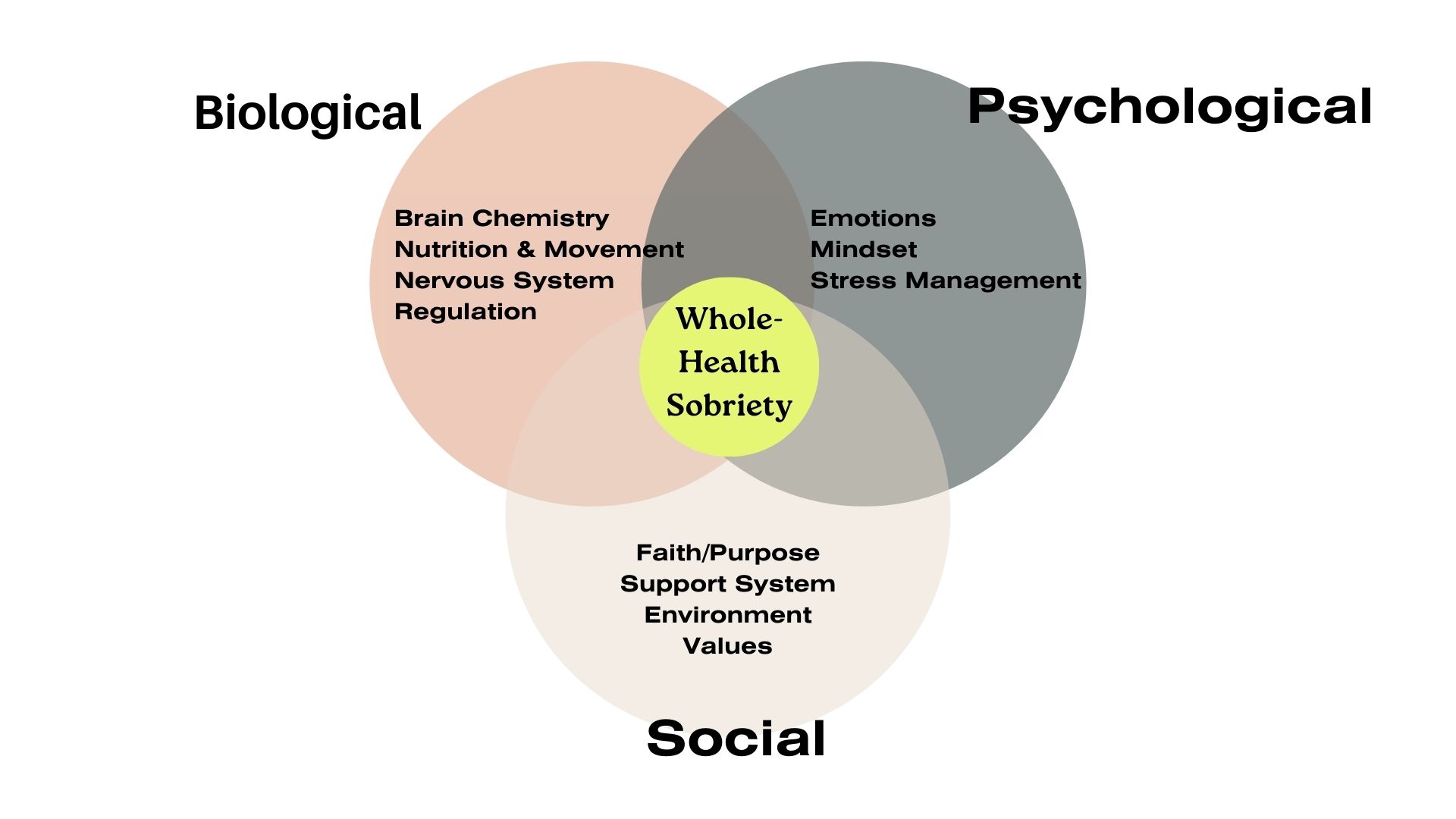
Whole Health Method Model for Sobriety by Heidi Nichole Coaching
BIOLOGY: Supporting the Body to Reduce Cravings and Feel Good
1. Balancing Brain Chemistry
Alcohol depletes neurotransmitters like dopamine and serotonin, often leaving you feeling anxious, moody, or unmotivated. No wonder you’re struggling!
Quick Tip: Incorporate foods rich in amino acids and consider supplements to help rebuild & replenish neurotransmitter balance, vitamins & nutrients that alcohol depletes. Prioritizing Omega-3 fatty acids can also support cognitive function and reduce brain fog. Trust me, your brain will thank you.
2. Balancing Blood Sugar
Blood sugar crashes often mimic alcohol cravings. Not fun.
Quick Tip: Eat balanced meals with protein, complex carbs, and healthy fats every 3-4 hours to stabilize blood sugar. This can drastically reduce cravings and improve energy levels. It’s a game changer for women in midlife sobriety.
3. Regulating the Nervous System
Living with chronic stress keeps you in a constant state of fight-or-flight, which increases cravings and emotional instability. And nobody has time for that.
Quick Tip: Practice simple grounding techniques like 4-7-8 breathing, short walks, or cold water exposure to calm your nervous system. Seriously, splashing cold water on your face works like magic. These are powerful tools for regulating your emotions in a thriving whole-health sober lifestyle.
PSYCHOLOGY: Managing Moods and Stress Without Alcohol
1. Break the Stress-Drink Cycle
If alcohol was your go-to stress relief, it’s time to build a new coping toolkit. And hey, it’s okay if this feels awkward at first. Many of us weren't taught how to "cope' so stop beating yourself up & start right now!
Quick Tip: Create a list of 5-10 healthy coping strategies like listening to music, calling a friend, journaling, or doing breathwork. You’ll be glad you did. Having alternatives practiced & ready will help you break the stress-drink cycle.
2. Reframe Thoughts Around Sobriety
Your thoughts shape your experience in sobriety. No surprise there.
Quick Tip: Shift from "I can’t drink" to "I’m choosing what’s best for me." This subtle change reinforces empowerment rather than deprivation. Feels better, doesn’t it?
3. Challenge Negative Thoughts Using the 3 C's- a wonderfully easy trick I learn from my therapist!
Our inner critic often gets loud in sobriety. Annoying, right?
Quick Tip: Practice the Catch, Check, and Change method:
Catch the negative thought.
Check if it’s rational or helpful. Ask yourself, "Is this thought serving me? Is it true?"
Change it to a more balanced or encouraging thought.
For example, if you think "I’ll never feel normal without alcohol," catch that thought, check the evidence (what progress have you already made?), and ask, “How is this thought serving me?” Then, change it to: "Healing takes time, and I’m already making progress."
SOCIAL: Faith, Connection, and Environment for Success
1. The Role of Faith and Purpose
Having a sense of purpose and faith can provide strength and resilience in sobriety. Faith-based sobriety support offers a source of comfort and encouragement.
Quick Tip: Spend 5 minutes daily in prayer, meditation, or reflection. Consider keeping a gratitude journal to reinforce positive thinking. Honestly, this small shift can be huge.
2. Build Supportive Connections
You don’t have to do this alone. Your support system plays a critical role in your success.
Quick Tip: Evaluate your relationships. Ask yourself, "Do I feel uplifted or drained after spending time with this person?" Prioritize those who genuinely support your sober journey. If you’re looking for community, consider joining a sobriety support group—there are even some faith-based support groups that just add that extra layer to encourage you.
3. Create an Empowering Environment
Your surroundings influence your choices. It’s just the way we’re wired.
Quick Tip: Remove alcohol from your home, create comforting sober rituals, and build a space that promotes relaxation and joy. Imagine your space as a sober sanctuary. Cozy, right?
Actionable Takeaways
Sobriety isn’t about using sheer willpower — it’s about giving your body, mind, and spirit what they need to feel good.
Identify one area in the Biopsychosocial Model where you can start making small changes.
Reflect on your current support system and environment — what’s working and what’s not?
Challenge negative thoughts by asking, "Is this true? How is this thought serving me?"
Remember, white-knuckling isn’t the only option. By taking a whole-health approach, you can break free from the struggle and experience true freedom in sobriety.
If you’re ready to explore deeper support, feel free to reach out — I’d love to walk alongside you on this journey. Sobriety should feel like freedom, not a fight. Let’s take the first step together.
Sound good? Feel free to leave any comments or questions below or email me at @hello@heidinicholecoaching.com— I'd love to hear from you!
Join our mailing list
Get the latest and greatest updates to your inbox!